What is really in the bag
Every premium pet food says responsibly sourced. One of them lets you check.
Most brands publish an ingredient list. A few publish where every single item came from. The difference takes about a minute to test.
Walk down the premium aisle and read the front of the bags. Responsibly sourced. Ethically sourced. Thoughtfully sourced. The words are everywhere, they cost nothing to print, and almost none of them can be checked by the person paying for the bag.
That is not an accusation of dishonesty. Most pet food companies genuinely do not know. A modern kibble is assembled from three dozen inputs bought through brokers, and the brand at the top of the chain often sees a spec sheet rather than a farm. Publishing an origin for every line would mean knowing every line, and knowing every line is expensive.
Which makes the exceptions worth finding. Open Farm prints ETHICALLY AND SUSTAINABLY SOURCED across the front of its bags, the way its competitors do. Then it does something almost nobody does: it publishes the origin of every ingredient in the bag, ties it to the specific batch you bought, and puts the lookup on its own website for anyone to run.
Here is how to run it, what comes back, and where it stops.
Step oneFind the eight characters almost nobody looks at
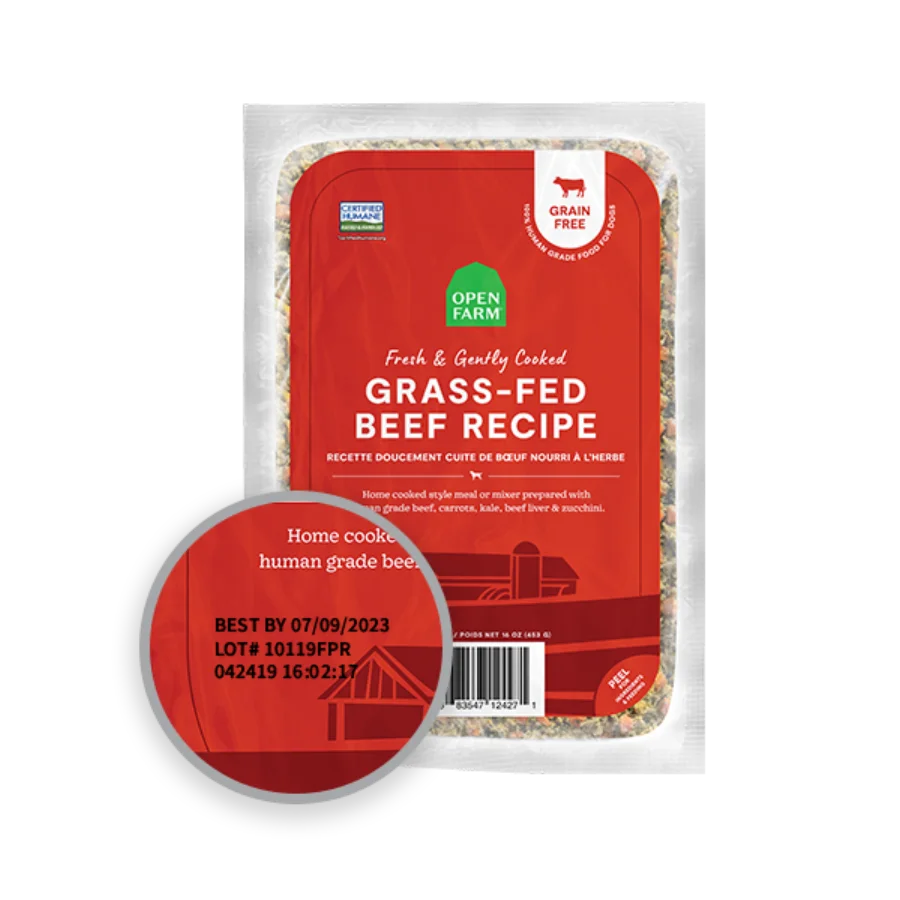
Every Open Farm pack carries a lot code. It is the string the factory uses to identify one production run, and it moves around depending on the format, which is why most people have never noticed it. Open Farm publishes a map of where it hides:
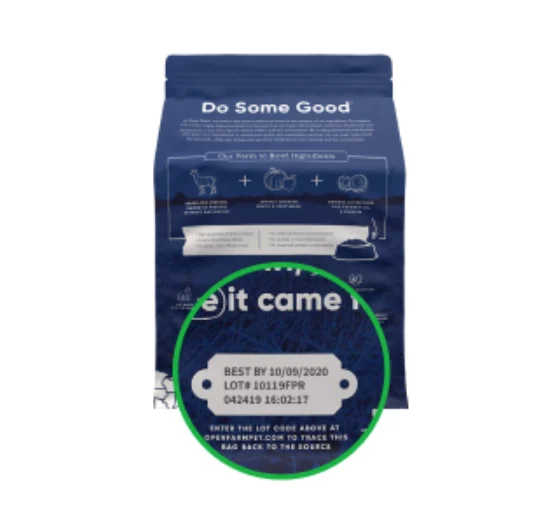
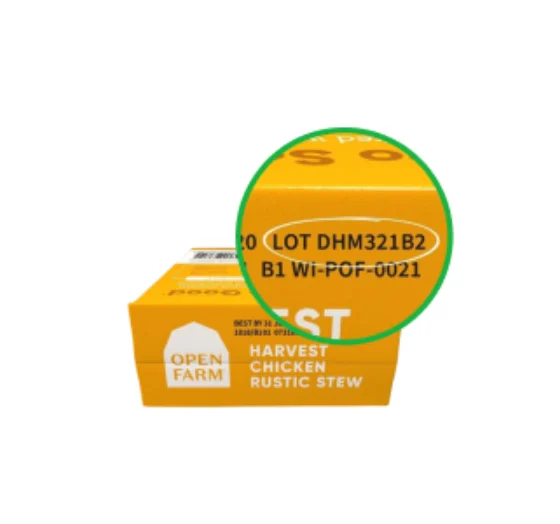
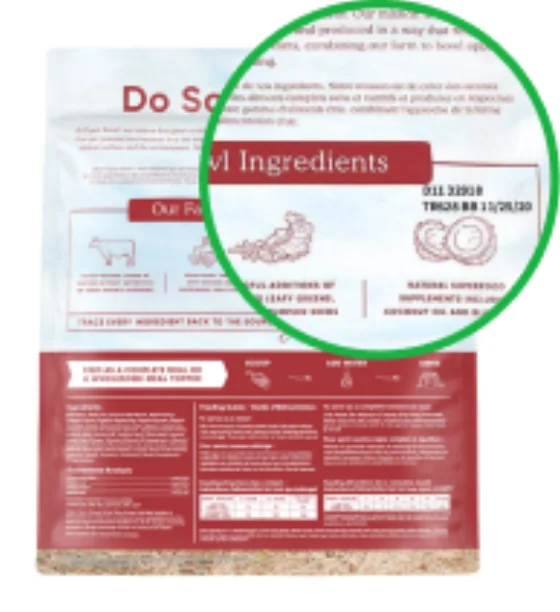
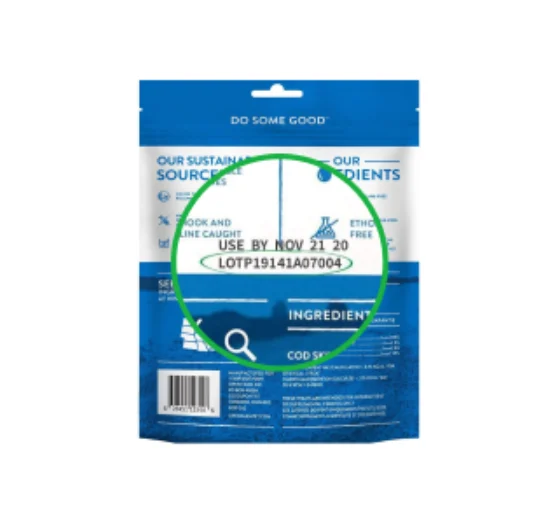
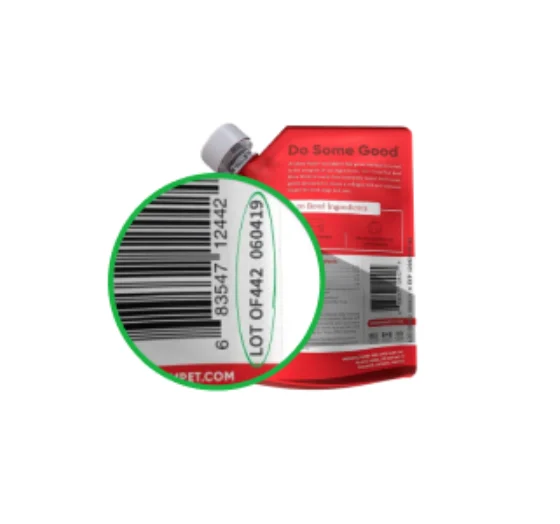
- Read the code off the pack. On a bag of kibble it sits under the best before date, in the same dot matrix ink, something like LOT# 10119FPR.
- Type it into the traceability tool on Open Farm's own site. No account, no email, no app.
- Read what comes back. Not a marketing page. A list of the ingredients in that specific run, each one with the place it came from.
The front of the bag makes the same offer a second way. Printed beside a QR code, under the words THE OPEN FARM PROMISE, is the line Scan Here to learn more about our animal welfare, sourcing & sustainability standards. Four claims sit next to it, in the same block of white type: 100% TRACEABLE INGREDIENTS, WILD-CAUGHT PACIFIC SALMON NATURALLY FREE FROM ANTIBIOTICS, NON-GMO GRAINS, VEGETABLES AND FRUIT, and MADE WITHOUT LEGUMES, POTATOES OR FILLERS.
Detailed ingredient lists are good, but tracking every single thing in your pet's bowl back to its source is even better. Trace the source of every ingredient in every bag instantly by scanning the lot code on the bag. Open Farm, transparency pageStep two
What actually comes back
Open Farm keeps a worked example on its own site, for anyone without a bag in hand: its bestselling dog kibble, the Wild-Caught Salmon & Ancient Grains recipe, traced on a sample lot packaged May 12, 2024. This is the answer that comes back. Thirty seven ingredients. Every one with a named origin, down to the state or the province where the crop was grown.
| Ingredient | Origin |
|---|---|
| Wild-Caught Pacific Salmon | United States, Alaska |
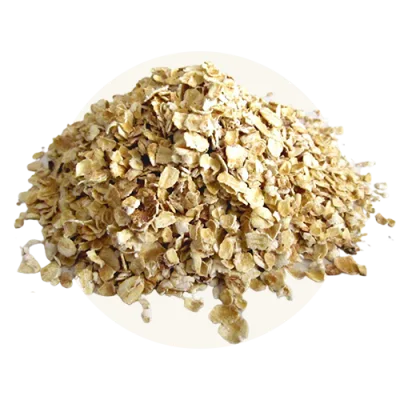
| Oats | Canada, Manitoba |
| Ocean Whitefish Meal | United States, Washington |
| Sorghum | United States, Nebraska |
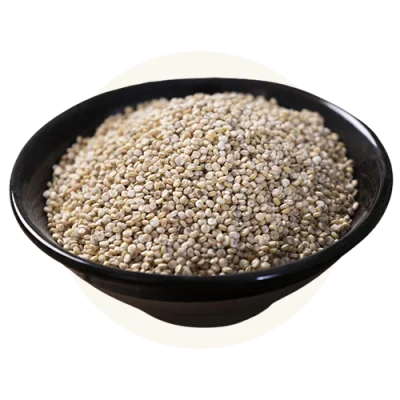
| Quinoa | Canada, Saskatchewan / Peru |
| Coconut Oil | Malaysia / Indonesia / Philippines |
| Herring Meal | Canada, Newfoundland / United States, Alaska |
| Natural Flavour | United States, Missouri / Canada, Quebec |
| Millet | United States, Nebraska |
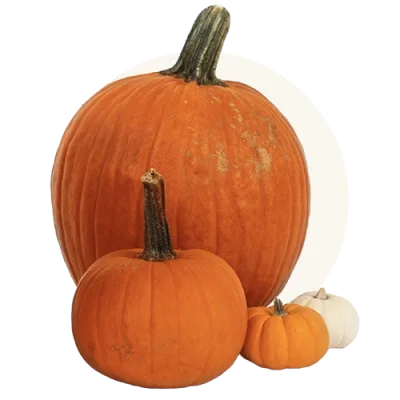
| Pumpkin | Honduras |
| Salmon Oil | Norway / Chile |
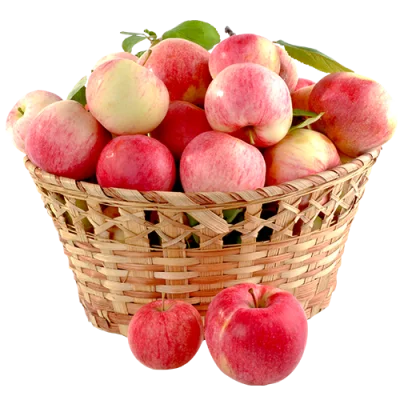
| Apples | United States, Michigan |
| Chia Seeds | Paraguay |
| Potassium Chloride | Canada, Saskatchewan |
| Salt | United States, Kansas |
| Chicory Root | Belgium |
| Choline Chloride | United States, Missouri |
| Vitamin E Supplement | Switzerland / United States |
| Calcium Pantothenate | Scotland |
| Niacin Supplement | Switzerland |
| Vitamin A Supplement | Switzerland / France |
| Riboflavin Supplement | Germany / Korea |
| Vitamin D3 Supplement | United States / France |
| Vitamin B12 Supplement | France |
| Thiamine Mononitrate | Germany |
| Folic Acid | France |
| Zinc Proteinate | United States |
| Calcium Carbonate | United States |
| Iron Proteinate | United States |
| Copper Proteinate | United States |
| Manganese Proteinate | United States |
| Selenium Yeast | United States |
| Calcium Iodate | United States |
| Taurine | Japan |
| Mixed Tocopherols | United States, Iowa |
| Cinnamon | Vietnam / Indonesia |
| Turmeric | India |
Source: openfarmpet.com traceability page, read August 18, 2026.
Read the middle of that list rather than the top. Anybody can say the salmon is from Alaska, because the salmon is the thing on the front of the bag. The interesting rows are the ones nobody markets. Chicory root from Belgium. Calcium pantothenate from Scotland. Taurine from Japan. Chia seeds from Paraguay. Those are supply chain answers, and a brand that did not know them would simply have left the column blank.
Nineteen origins is not a bragging number, it is an honest one. Vitamins and trace minerals really do come from Switzerland, Germany, France and Korea, because that is where the world makes them. A brand inventing a story would have said everything came from a family farm down the road. This list reads like an audit, which is the point.
Now trace a different bag of the same recipe
Here is the test that separates a sourcing tool from a sourcing brochure. A brochure never changes. A real record has to move, because harvests move, boats move and contracts get renewed. So take the same recipe and look at a newer batch. Open Farm publishes that one as well, on the product page itself, where it states that the list shown there reflects its most recent lot. Set the two side by side.
| Ingredient | Sample lot, May 2024 | Most recent lot |
|---|---|---|
| Pumpkin | Honduras | United States, Wisconsin |
| Herring Meal | Canada, Newfoundland / United States, Alaska | Mexico |
| Salt | United States, Kansas | United States, Utah |
| Apples | United States, Michigan | United States, Wisconsin |
| Salmon Oil | Norway / Chile | Chile |
| Vitamin A Supplement | Switzerland / France | Denmark / Poland |
| Wild-Caught Pacific Salmon | United States, Alaska | United States, Alaska |
Left column: traceability page sample lot. Right column: ingredient origins published on the product page, read August 18, 2026.
The pumpkin left Honduras for Wisconsin. The herring came from Mexico instead of the North Atlantic. The salt moved from Kansas to Utah. The recipe on the front of the bag did not change at all, only the harvests behind it did. And the wild-caught salmon stayed exactly where it was, in Alaska, which is the row a marketer would never have risked leaving identical if the table were decorative.
That movement is the whole proof. A static sourcing page can be written once and never touched again. A per lot record has to be maintained, batch after batch, or it goes visibly wrong. Which is also why the eight characters on your bag matter more than anything printed on the front of it.
Step threeThe fish is the part you can verify without trusting anyone
Salmon is where pet food sourcing gets slippery, because the word covers two completely different industries. Farmed salmon and wild caught salmon share a name and almost nothing else. Open Farm takes a position and names it on the label.
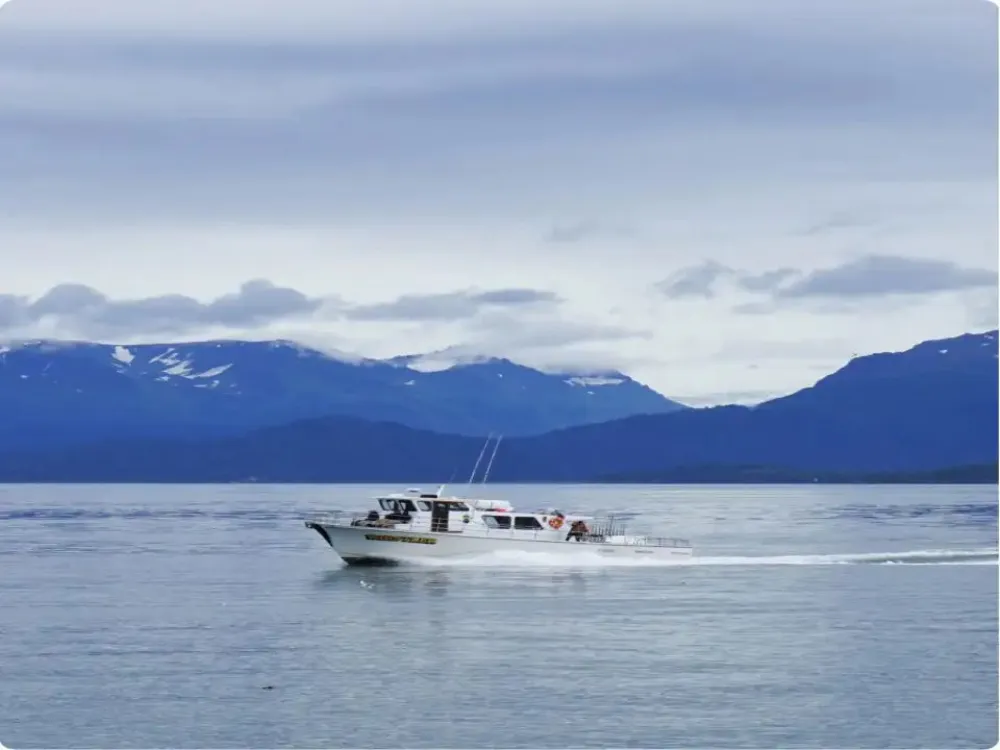
The company describes its whitefish as 100% wild-caught, on a natural diet, Ocean Wise Recommended as a sustainable seafood source, and caught via methods to minimize bycatch and protect marine environments. For Pacific salmon it makes the bycatch commitment again. Ocean Wise is a conservation organization that assesses seafood independently, so the claim points at a body outside the company rather than at a slogan the company owns.
That matters more than it sounds. A brand can call its own fish sustainable forever. It cannot make a third party recommendation appear on a package unless the third party made it.
The bodies Open Farm names as partners: Global Animal Partnership, Certified Humane, Ocean Wise, the Marine Stewardship Council and the Aquaculture Stewardship Council.
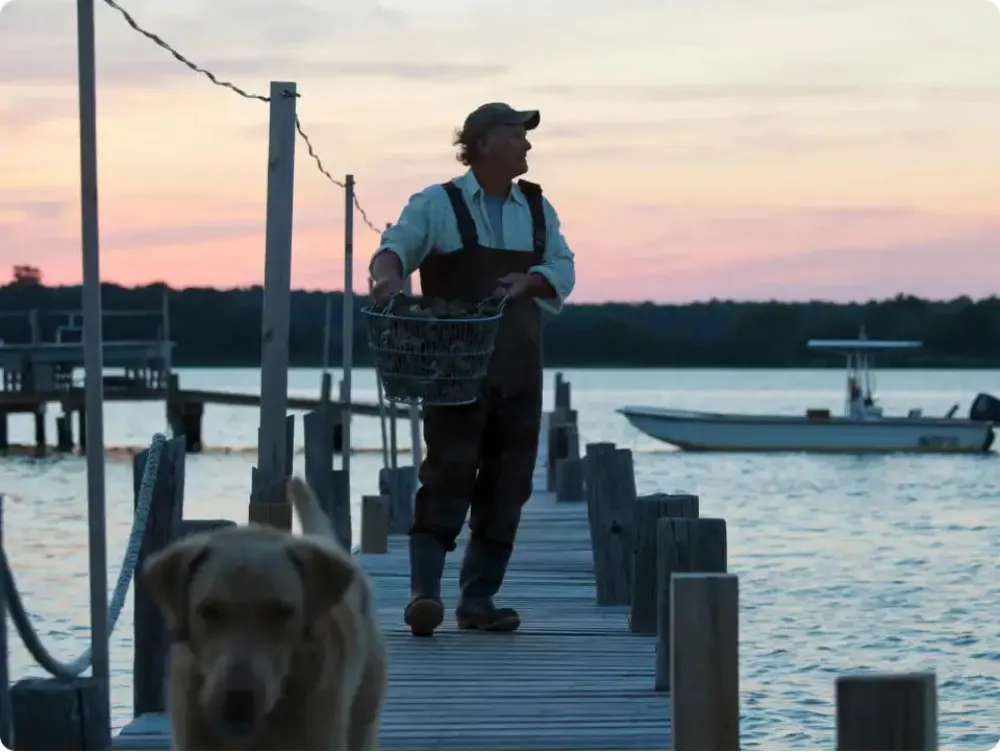
Meat has a grade, and Open Farm publishes it species by species
Humanely raised is the other phrase that costs nothing to print. The useful version of it is a tier, awarded by somebody else, and different for each animal. Open Farm states that 100% of the meat it uses is certified to comprehensive animal welfare standards, and then it does the unusual part: it says which standard, for which species.
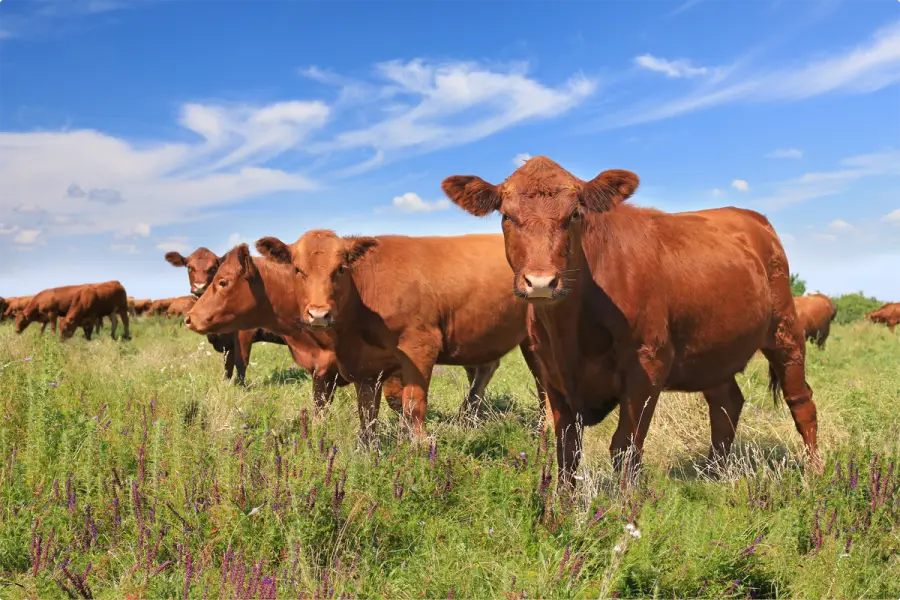
Grass-fed and pasture-raised, never in a feedlot. The highest tier Open Farm publishes for any species.
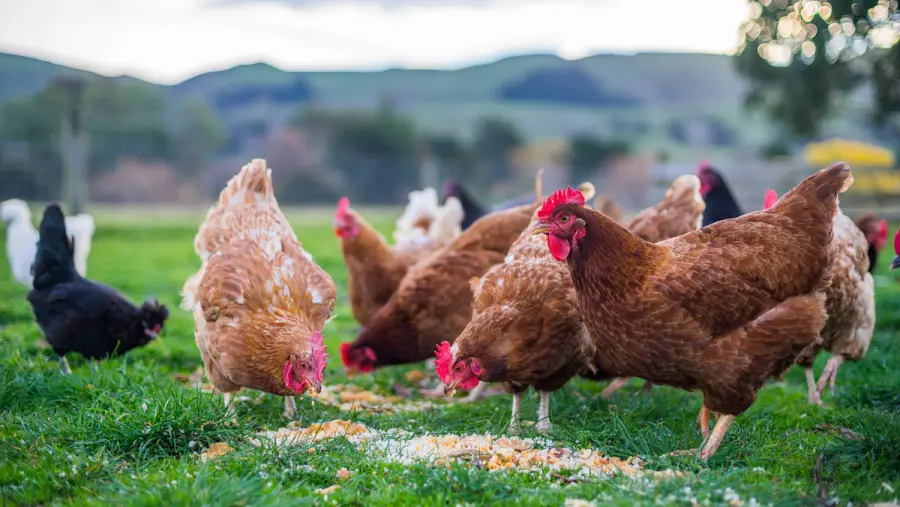
Raised on vegetarian diets in enriched environments with natural light, and raised without antibiotics.
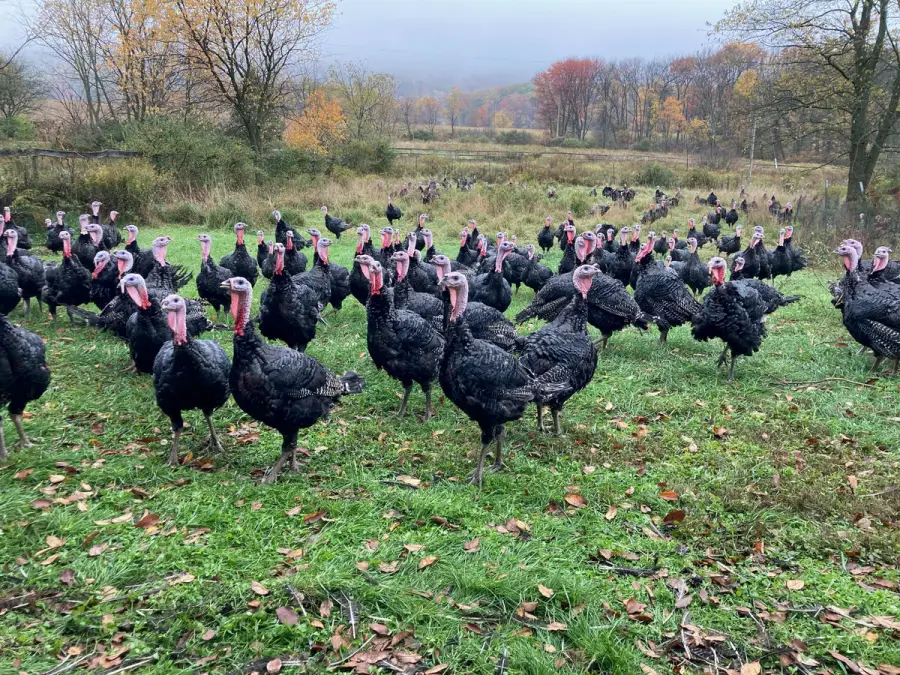
Raised on vegetarian diets with extra space.
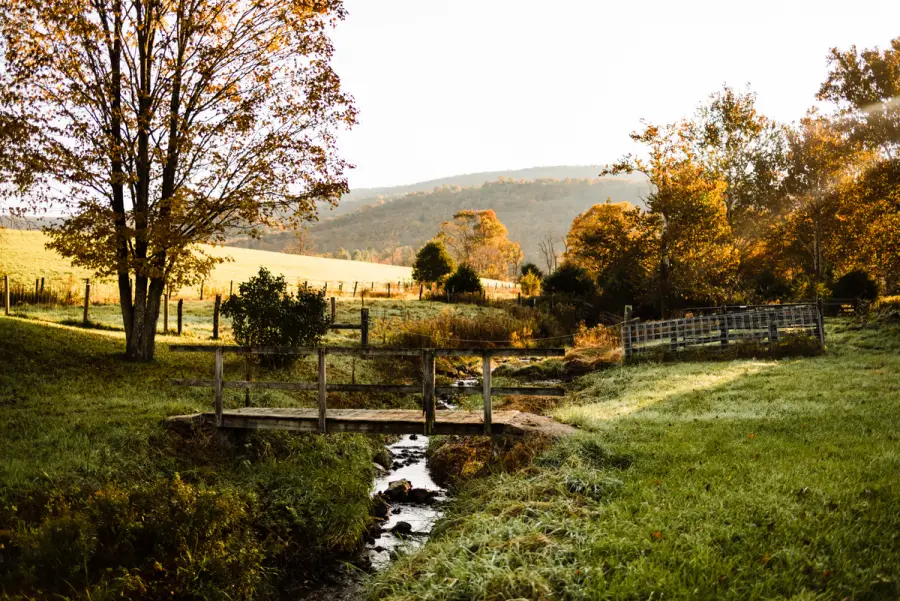
Pork raised and handled to the Certified Humane standard on vegetarian diets in enriched environments. Lamb grass-fed and pasture-raised, without antibiotics or added hormones.
Notice that the tiers are not all the same, and that the company published the lower ones anyway. Turkey sits at Step 1 while beef sits at Step 4. A marketing department writing this page alone would have quietly rounded everything up to the best number in the set.
The eight principles all of it is measured against
- Raised without antibiotics or added hormones
- Environment to enable natural behaviors
- Provided a nutritious diet
- No unnecessary physical alterations
- Plenty of space to roam
- Humane handling and processing
- No crates or cages
- Third party certified for animal welfare
Open Farm calls this a three tier farm animal welfare program and states that 100% of our meat proteins comply with those eight principles. The eighth one is the load bearing item. Without third party certification the other seven are a promise. With it, they are an audit somebody else can fail you on.
Where it stopsWhat the code does not tell you
A page that only praised would be worth less than one that draws the line, so here is the line.
Three honest limits
It is an origin, not a farm visit. Chia Seeds, Paraguay tells you the country. It does not name the cooperative or let you look at the field. For crop ingredients this is where the trail ends.
Traceability is not nutrition. Knowing that the sorghum came from Nebraska says nothing about whether the recipe suits your dog. A traceable food can still be the wrong food for a particular animal, and the reviews of any brand contain dogs it did not agree with.
Certification tiers describe conditions, not outcomes. G.A.P Step 4 is a meaningfully better standard than Step 1. It is still a standard, audited on a schedule, not a camera in the barn.
None of that undoes the main point. The gap between a brand that can answer these questions and a brand that cannot is enormous, and it is visible in about a minute, for free, from your own kitchen, using a code that was already printed on something you own.
What buyers sayThe people who bought it keep mentioning the same thing
Read enough reviews of a dog food and the pattern is always coat, stool and appetite. On this product a second theme runs underneath, and it is unusual: buyers talking about knowing where the food came from.
I like that I can see when the food was made and where it was sourced so I can confidently feed my dogs high quality meals.
Scott B.Verified buyer
All of the ingredients are listed so you know where everything is from. Can't get better than that!
Susan B.Verified buyer
I love how transparent they are about what the kibble contains and where those ingredients came from!
Niki R.Verified buyer
What I love about Open Farm are the pure and limited ingredients and knowing the source of all of the ingredients.
Veronica N.Verified buyer
I researched kibble for several months, the transparency with ingredients was really important to me.
Teresa R.Verified buyer
They love it and it's easy on their stomachs. And I love that all the ingredients are traceable!
Kelchis R.Verified buyer
Reviews published on the product page at openfarmpet.com, read August 18, 2026. Quoted as written.
The bag in questionThe recipe every number on this page refers to
The traceability tool works on anything Open Farm makes. The list above happens to be the Wild-Caught Salmon & Ancient Grains kibble, which is the recipe the company puts forward as its traceable bestseller.
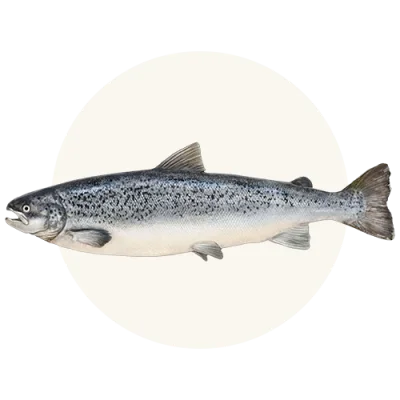
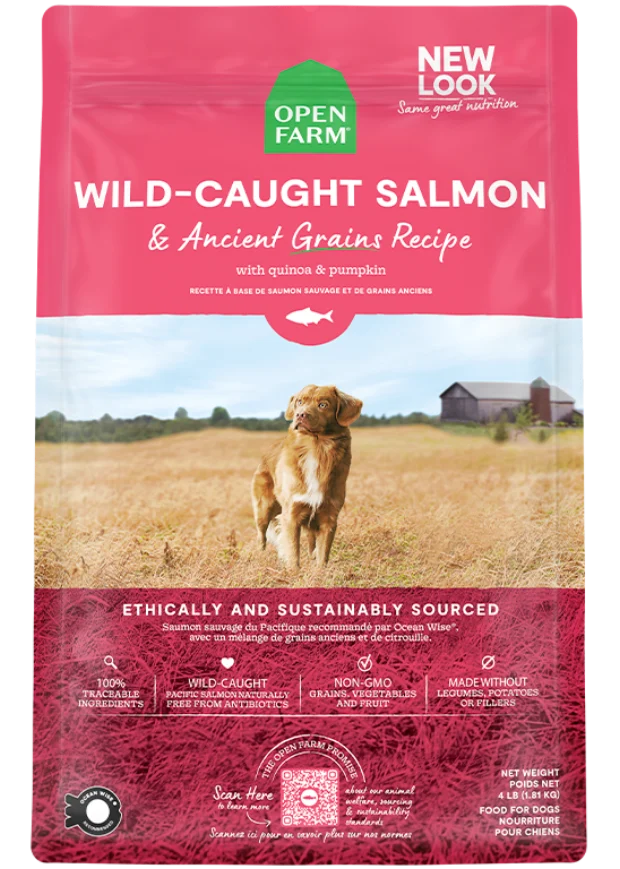
Wild-Caught Salmon & Ancient Grains Dog Kibble
4.9 out of 5 from 2,608 reviews on openfarmpet.com
- Ocean Wise recommended wild-caught salmon, rich in omega-3 fatty acids
- Non-GMO fruits and vegetables, with pumpkin, quinoa and coconut oil
- Free of peas, potatoes and legumes
- Complete and balanced, formulated for small and medium breed puppies, adult and senior dogs
- 100% traceable, which is the whole subject of this page
Prices as published by openfarmpet.com on August 18, 2026.
Then do the thing this article is actually about. Whatever brand is in your cupboard tonight, turn the bag over and look for a lot code. Either it leads somewhere, or it does not. That answer is worth knowing before the next bag.
Trace a bag you already own Open Farm's lot code lookup, free and without an account